

Walking in Awareness: The Pathway to Inner Peace


In a world that feels increasingly loud, fast, and fragmented, the simple act of walking - placing one foot in front of the other - can become a profound spiritual practice. Walking in awareness is not just about movement; it is about presence. It is about learning to inhabit each step, each breath, and each moment with intention. In doing so, we rediscover a pathway to inner peace that does not depend on external circumstances, but arises from within.
Across cultures and spiritual traditions, mindful walking has long been recognized as a gateway to awakening. From Zen kinhin (walking meditation) to Christian labyrinth walks, from Sufi whirling to Indigenous walking rituals on sacred land, the human body in motion has always been a teacher. Today, as anxiety, social fears, burnout, and digital overload become global conditions, walking in awareness feels less like a spiritual luxury and more like a necessary medicine.
What Does It Mean to Walk in Awareness?
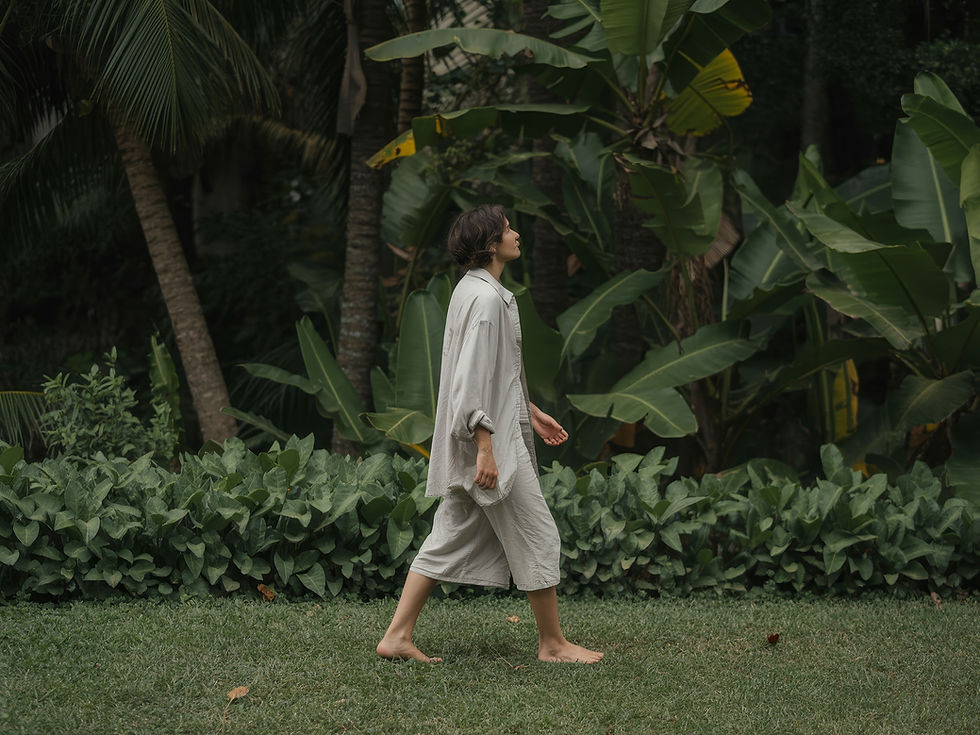
Walking in awareness is deceptively simple. It means walking while fully aware that you are walking. It means feeling the contact of your feet with the ground, noticing the rhythm of your breath, and gently returning your attention to the present moment whenever your mind wanders.
Thich Nhat Hanh, the Vietnamese Zen master, famously taught:
“Walk as if you are kissing the Earth with your feet.”
This poetic instruction points to something deeply practical: when we walk with awareness, we stop treating the ground beneath us as a mere surface to cross. Instead, we enter into a relationship with it. Each step becomes an act of gratitude, grounding, and reconnection.
In a culture that glorifies multitasking - checking phones while walking, rushing from one obligation to another - walking in awareness is quietly radical. It is a refusal to be pulled entirely into the future or trapped in the past. It is a choice to live, fully, here.
The Inner Landscape: From Restlessness to Stillness
Most of us carry a restless inner landscape. Our bodies may be walking down a street, but our minds are often replaying conversations, rehearsing worries, or scrolling mentally through endless to-do lists. Walking in awareness invites us to notice this fragmentation without judgment.
Jon Kabat-Zinn, a pioneer of mindfulness in modern healthcare, writes:
“You can’t stop the waves, but you can learn to surf.”
Walking in awareness does not mean eliminating thoughts or emotions. Instead, it teaches us to relate to them differently. As we walk, we notice the mind wandering. We gently bring it back to the sensations of walking. Over time, this repeated act of returning builds inner stability. We become less reactive, less overwhelmed, and more able to meet life as it is.
This is where inner peace begins - not as a permanent state of bliss, but as a growing capacity to be with whatever arises.
A Living Example: The Monks’ Walk for Peace
Since early 2026, a powerful real-world example of walking in awareness has captured global attention: a group of Buddhist monks undertaking a 2,300-mile “Walk for Peace” across the United States. Starting in Fort Worth, Texas, and walking toward Washington, D.C., these monks are practicing what they teach - using walking itself as a form of meditation and a living prayer for peace. At the half-way mark, more than one million people wordlwide were following the walk online.
According to international and U.S. media, the monks walk for months at a time, often barefoot, in silence or chanting softly, meeting communities along the way. Their journey has drawn large crowds and millions of followers online. Despite harsh weather, injuries, and even a serious accident that led to one monk losing his leg, they continue - step by step - with a message of compassion, unity, and healing. (The Guardian)
One of the monks was quoted saying:
“Every step is taken with purpose. We walk to remind people that peace is not something far away. It begins right here, with this step.”
This is walking in awareness made visible. Their journey is not only a physical pilgrimage but also a symbolic one. In a time marked by political division, global conflict, and emotional exhaustion, their slow, deliberate pace stands in stark contrast to the speed of modern life. Their bodies become moving reminders that peace is not only an idea - it is a practice.
Walking as a Response to Modern Stress
Mental health professionals increasingly recognize the benefits of mindful movement. Walking, especially when done slowly and attentively, has been shown to reduce stress, lower blood pressure, and improve mood. But beyond physiology, there is a deeper psychological and spiritual effect.
When we walk in awareness, we interrupt the constant mental narration that fuels anxiety and depression. We come back into the body. The body, unlike the mind, lives in the present moment. It breathes now. It steps now. It feels now.
In a world dominated by screens, this return to the body is profoundly healing. Many people report that their most peaceful moments are not during formal meditation on a cushion, but while walking in nature, along a beach, in a forest, or even through a quiet neighborhood at dusk.
As poet Mary Oliver wrote:
“Instructions for living a life: Pay attention. Be astonished. Tell about it.”
Walking in awareness is a way of paying attention with your whole being.
The Spiritual Dimension: Every Step a Prayer
In many spiritual traditions, walking itself is a form of prayer. In Buddhism, walking meditation is considered equal in importance to sitting meditation. In Christian pilgrimage, walking long distances to sacred sites is a way of embodying faith. In Islam, the Hajj involves ritual walking that symbolizes spiritual transformation.
What unites these traditions is the understanding that the body is not separate from the spiritual path. Every step can be an offering. Every breath can be a blessing.
The monks on the Walk for Peace embody this truth. Even in freezing rain and snow, they continue walking, chanting, and offering blessings to people they meet. One report described how they stopped in harsh weather to pray with a woman waiting for them, writing:
“In the harshest conditions, peace still finds a way. In the coldest moments, hearts still warm with compassion.” (WRAL News)
This is awareness in action. It is mindfulness that does not retreat from the world, but walks directly into it. This is walking to inner peace.
Walking Through Uncertainty and Global Challenges
Our era is defined by uncertainty: climate change, war, economic instability, rapid technological shifts, and social polarization. It is easy to feel powerless in the face of such vast challenges. Walking in awareness does not solve these problems directly - but it changes how we meet them.
When we walk in awareness, we train ourselves to respond rather than react. We cultivate patience in a culture of immediacy. We embody steadiness in a world of volatility. The monks’ Walk for Peace is a powerful symbol of this: they are not marching in anger or rushing in protest. They are walking in presence, offering a different model of change - one rooted in inner transformation.
As Mahatma Gandhi famously said:
“Be the change that you wish to see in the world.”
Walking in awareness is a way of being that change, one step at a time.

How to Practice Walking in Awareness
You do not need to walk 2,300 miles to practice walking in awareness. You can begin wherever you are.
Here is a simple way to start:
Slow down. Walk a little more slowly than usual.
Feel your feet. Notice the sensations of lifting, moving, and placing each foot.
Connect to your breath. Let your breathing be natural. You might silently say, “in” and “out.”
Notice your surroundings. Colors, sounds, light, air on your skin.
Gently return. When your mind wanders, kindly bring it back to the next step.
You might choose a short daily walk as a ritual - around your block, in a park, or even down a hallway at work. Over time, this practice can reshape your relationship with stress, time, and even yourself.
Inner Peace as a Way of Walking
Inner peace is often imagined as a destination - a place we will reach someday when life finally calms down. Walking in awareness offers a different perspective: peace is not a place. It is a way of walking.
The monks on their Walk for Peace are not waiting to arrive in Washington, D.C., to experience peace. They are practicing it now, in rain and sun, in applause and in hardship. Their steps teach us that peace is not postponed. It is practiced.
As one monk told a crowd:
“Peace is not something we find at the end of the road. Peace is the road.”
Conclusion: One Step at a Time
Walking in awareness invites us to live our lives one step at a time, not as a metaphor, but as a literal, embodied truth. Each step is an opportunity to return. Each step is a chance to choose presence over distraction, compassion over judgment, and peace over haste.
In a restless world, mindful walking is a quiet revolution. It asks nothing dramatic of us - only that we pay attention. And in that attention, something remarkable happens: we remember that we are already home, right here, in this step, in this breath, on this Earth.
So the next time you walk, pause for a moment. Feel the ground beneath you. Let your next step be a small act of peace. In doing so, you join a long lineage of walkers - monks, pilgrims, poets, and ordinary people - who have discovered that the pathway to inner peace is, quite literally, beneath our feet.


Comments